Sunday, January 11, 2015

Krista Ramsey Blog Post: Bear in the Neighborhood? Thrilling, Not Nuisance


Krista Ramsey Bear Column

Krista's column talks about a bear that was rambling through her Montgomery neighborhood. She goes on to thinking that the bears shouldn't be a nuisance to the people, in fact, they should be left alone because they are marvelous creatures just like us.

One line that I thinks is best written is, "We say it's our property. We want her to move along. There must be some ordinance she's breaking. She doesn't care. Whose land was it first?". This line greatly impacts the reader because it really shows why bears or any other animal shouldn't be a bother to people. It is the animals' land and they are abiding by their natural laws. Bears are not breaking any law or ordinance for being at that specific place. This line really shows the meaning of this column. Some observations about the syntax of this line is that Krista uses short, detached sentences to create more emphasis on her writing and the tone. The diction also shows the mood of the author and how she really feels about bears being a nuisance to people (strongly disagrees).

Ramsey's writing style is that she starts off saying a lot of detail in the beginning and she ends it by saying a brief sentence that leaves a lasting impact on the reader. For example in "For better vision, kids need time outdoors" article, she states, "What all kids need is more training in three dimensions, Clark says. Life is not two-dimensional." The last couple of words about life is true and connects back to her topic. A second example is in "Super Bowl QBs score points for great style" article, she says, "And as you look down at your fitted blazer and heels in a sea of shorts, T-shirts and nylon jackets at your daughter's college graduation, you probably wondered why you bothered. Keep bothering." The reader wouldn't expect that the author would write only two words at the end but you can tell those two words were meaningful. A last example is in "Bear in the Neighborhood? Thrilling, Not Nuisance", she explains "It will likely be 100 years before another bear has the directional challenges – or chutzpah – to come lumbering through my neighborhood. I hope, when he does, people smile over their coffee and let him pass." Again, Krista starts off with some detail and ends with a lasting impact to the reader. All 3 examples show how Ramsey's writing style is and how much it's effective.

Three Questions to the Author:
1) Are you writing columns in additional newspapers, other than the Cincinnati Enquirer? If so, what are they?
2) How is your career in writing in newspapers? Is it a great experience for you?

3) When you were in college, were you thinking of being a columnist or something else?


http://www.gannett-cdn.com/-mm-/e8d5aa103a2a04d25d9cba25e0d842eff569334d/c=0-800-3200-4000&r=x233&c=210x230/local/-/media/Cincinnati/2014/07/10/krista.ramsey1-copy.jpg


http://www.gannett-cdn.com/-mm-/e8d5aa103a2a04d25d9cba25e0d842eff569334d/c=0-800-3200-4000&r=x233&c=210x230/local/-/media/Cincinnati/2014/07/10/krista.ramsey1-copy.jpg


Sunday, December 14, 2014

Anne Frank: The Diary of a Young Girl (2)

In this post, I'll be writing about the best part and the worst part of my book. I will also write a text to world connection. 

Best part of my book: 
The quality I like about my book is the way it is written. Reading a diary from a girl during the holocaust is reading a primary source from that period of time. Anne Frank always starts off her diary entry by saying "Dear Kitty" because she thinks this diary will be her friend and she names her "Kitty". This shows how much Anne Frank loved writing in her book and how much she is dedicated to it despite all the wrongdoings surrounded by her. She never missed out writing any major events that happened in that office building. Every time she ends her entry by "Yours Anne", she starts off the next entry from where she left off. There is no confusion. Also, Anne Frank's writing is very neat and clearly understandable. Her vocabulary is amazing at that young of an age. For an example, "I only wish I could see the results already or occasionally receive encouragement from someone who loves me. Don't condemn me; remember that sometimes I too can reach the bursting point." (Frank 59). 

Worst part of my book:
There is almost nothing I can find in this book that I don't like. She does skip some days in her writing, but whenever the next entry is, she summarizes everything that happened between the last entry and the current entry. Since it is written during the Holocaust, the mood of this book is solemn. But with Anne's cheerful attitude and actions, she keeps her diary lively.

Text to World Connection:
Anne's diary obviously connects back to the Holocaust - a tragic event that shook the whole world during the 1940s. A genocide of six million Jews. Anne was one of them. Anne's diary shows how she escaped to Amsterdam and lived for 2 years there without getting captured. But unfortunately, she and her family gets discovered by the Gestapo. The Holocaust led to World War 2.
Anne Frank's original diary.


 http://www.annefrank.ch/system/html/tagebuch-db78f214.jpg


Thursday, December 4, 2014

Anne Frank: The Diary of a Young Girl (1)

In this post I will be writing about my 3rd and final nonfiction book for the semester, Anne Frank: The Diary of a Young Girl. I'll write a concise preview of this book and a summary of what I read so far.

Preview: 
I chose this book because I have heard many positive remarks on it and it is really interesting because the book is written in the point of view by a girl during the period of the Holocaust. The introduction and afterword is written by Eleanor Roosevelt. This book, written by Anne Frank, tells her life of how she and her family escaped from being occupied by the Nazis-but only for a while. They had to remain in Amsterdam in an abandoned office building, away from Holland. They were joined by other families too. They maintained that hiding place for 2 years until the Gestapo discovered they lived there. After the raid was when Anne's father found this diary. He helped publish this book. This book tells the process of how Anne and her family survived in the hiding place for 2 years.

Summary:
I am not very far into the book since I just started this. So far what happened was that she and her family escaped to Amsterdam to live in a hiding place. Few days later, the Van Daans move into the hide out. Anne describes her life in the office building and  how she adapts to the new environment.

Anne Frank's writing is very detailed and is clear. You can openly understand the text and can understand her feelings and actions that take place in the book. So far, I really like this book a lot (much more than Little Boy Lost!) and I hope to keep reading it.


http://mentalfloss.com/sites/default/files/anne_writing.jpg
Anne Frank

 http://mentalfloss.com/sites/default/files/anne_writing.jpg


Saturday, November 22, 2014

Finished Little Boy Lost!

I finished Little Boy Lost! In this post, I'll write about the main events that happened from the last post.

After Pierre and Hilary traveled to France to find his son, they meet Madame Quilleboeuf. Pierre and Hilary ask questions about her life. She worked for monsieur le cure. One day, when she was going to her everyday washing, she found a boy. "A little boy with golden curls all over his head, just about two years old and looking like like one of God's angels as he lay there." (Laski 58). So she picked him up and he lived lived with Madame Quilleboeuf for 3 days. She found out that the little boy's mother died. Some days later, a young man came to the door to fetch the little boy.

Hilary has been told that his son was living in an orphanage. "He walked some distance from the hotel before he asked a passer-by the way to the Orphanage of Notre-Dame-de-la-Pitie." (Laski 99). He meets The Madame Superior. Hilary talks about his son and what he was like. The Mother Superior answers that your son is named Jean (named by the nuns). A few moments later, Hilary sees Jean and instantly feels like this is his son. "The little boy came in and in the instant before his eyes perceived the child there was torn from his blood, his body, his very consciousness the conviction that this was his son." (Laski 115). This leads us to part 3.

Hilary goes on a stroll with Jean. They talk to each other to form a small bond. Hilary tests him by emotionally bonding with him, but Jean fails the test. The Mother Superior says that if you don't take this child, even if he isn't yours, then she is failing in her duty. "...If I see Jean has a chance of a good home, and a home where he may continue in his religion, I should be failing in my duty..." (Laski 202). Hilary is shocked by what she said. Wandering around, he has seen an identical toy to the one where he has bought Lisa. They named the toy, "Binkie". Hilary sends the toy to the orphanage, and when Jean sees it, he yells "Binkie"! This shows that Hilary's son is Jean. "Hilary came through the door to hear the little's boy's shout of passionate triumph: It's Binkie! It's Binkie come back!" (Laski 248).

This is the end of my book. I would rate this book 3.5/5 because mainly of the vocabulary. It took me a very long time to finish this book because of the challenging words. But I really liked the plot of the story because it is a very heartwarming book about a father and a son reuniting. I would recommend this book to anyone who wants a challenge in historical fiction books.

*There is also a movie based on this book. You can see it of you want!*


Marghanita Laski

 http://thewritesofwoman.wordpress.com/2014/07/31/unsung-female-writers-part-one/

Friday, November 14, 2014

Little Boy Lost (4)

In this post, I will be writing about what the best thing in my book is and the worst thing in my book is. I will also talk about the most important line from the chapter.

The best part of my book:
I think the best part of my book is when Hilary finally decides to go look for his son. He wants to keep a memory of Lisa by taking the responsibility to look for his son. "In 1945, three years after the little boy was lost, his father came to France to look for him" (Laski 31). He revives how France used to be before the war and compares with after the war. "This was not France as he remembered it, the bombed airport, the anonymous suburban road, the British army trucks drawn up beside him." (Laski 32). I chose these two quotes to support my reasoning because I felt like Hilary took the right decision to look for his son instead of him being an orphan.

The worst part of my book:
There aren't parts in the book that are bad, except for the vocabulary. But there was one part in the beginning I didn't like about Hilary. This was when Hilary relies on Pierre to come to France to look for Hilary's son. "I hope, Hilary thought anxiously, that Pierre will be there. This France was unfamiliar..." (Laski 32). I thought this was the worst part because I thought Hilary would go by himself, independently to look for his OWN son and not to rely on someone else for help. But instead he relied on Pierre. I thought he would take a lot of courage and responsibility to go by himself. This shows that Hilary isn't that responsible and is dependent on others.

The most important line:
I thought this was the most important line so far: "He said to himself, It's been so long now since the boy was lost. I've had over two years to make myself invulnerable to emotion. I can do without comfort now. I am content to live in my memories." (Laski 33). This shows how Hilary feels sorry that his son was lost. He wants to live with his son so he can "live with his memories".

Friday, October 24, 2014

Little Boy Lost (3)

I haven't really read as much in this book because it is very hard to understand, so i will write about some quotes i found and analyzing it. 

Quote 1:
"All that seems to be certain is that we should each do good where it is near to us, where we can see the end of it, and then we know that something positive has been done." (Laski 17). I think this quote means to say that whenever we find an opportunity to do something good, we should do it. Then we will know that at least something positive came out of it.

Quote 2:
"He had lifted his head again and his eyes were wide open and surprisingly bright. He seemed steadily to gather energy as he roused himself for the climax of all he had come to say, the true purpose of his visit." (Laski 21). I think this quote means to say that as Pierre snapped back to reality, he figured out that his visit was for Hilary; to find the little boy.

Quote 3:
"He looked at Pierre, and then saw, with sudden pity, that Pierre was rigid with apprehension. It did not occur to him that Pierre's apprehension was for himself, for his own reception of the story." (Laski 41). I think this quote means to say that Pierre was full of worry/anxiety. But it wasn't anxiety for himself, but the story with the little boy being lost.

Stay tuned to the next post!

Friday, October 17, 2014

Little Boy Lost (2)


In this post I'll write an update on the book, Little Boy Lost and what I think of it currently.

Update:

I'm actually not that far into my new book. I'm at part 2 where Hilary goes out to search for his son in France 3 years after he found out the little boy was lost. Pierre (a character who I didn't introduce in the 1st post),  gave the letter from Lisa to Hilary and told him to go to France to search for his son. Pierre wanted to go too but Hilary denied it.

In part 2, it starts off by Hilary getting off the plane and waiting for his bus to arrive. He says, "This was not France as he remembered it, the bombed airport, the anonymous suburban road, the British army trucks drawn up beside him." (Laski 32). But fortunately, he wanted to start his life afresh by looking for his son. He was hoping for Pierre to arrive because he felt isolated and lonely. He started thinking about how he would look because the last time he saw him was right when the little boy was born. He also thought how his life would be different without Lisa or the little boy or how he would've married someone else.                         

What I think of it currently:

To be honest, this is a challenging book for me. It has many vocabulary words in each paragraph that make it very difficult to understand. For an example, "Hilary shivered and longed for the bus to start, cursing the formalities that had held them so long at Le Bourget, passing them one by one through an incompetent sieve of officialdom." (Laski 33). I don't know about you, but I think that was a hard line to understand. Since this book was written in 1953, I thought of how the structure of the book would be different, than books nowadays. But I think this book is still interesting, so I will continue to read it.

...Well, that's how far I got! Stay tuned till the next post!


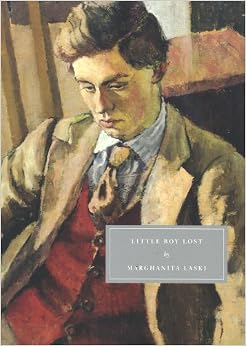
http://ecx.images-amazon.com/images/I/51bL0b8NefL._SY344_BO1,204,203,200_.jpg


http://ecx.images-amazon.com/images/I/51bL0b8NefL._SY344_BO1,204,203,200_.jpg